
Real estate developers
With innovative sampling approach, Haley & Aldrich clears path for new data center on challenging brownfield site
$500,000
saved for client with our previous sampling data
1,000+ truckloads
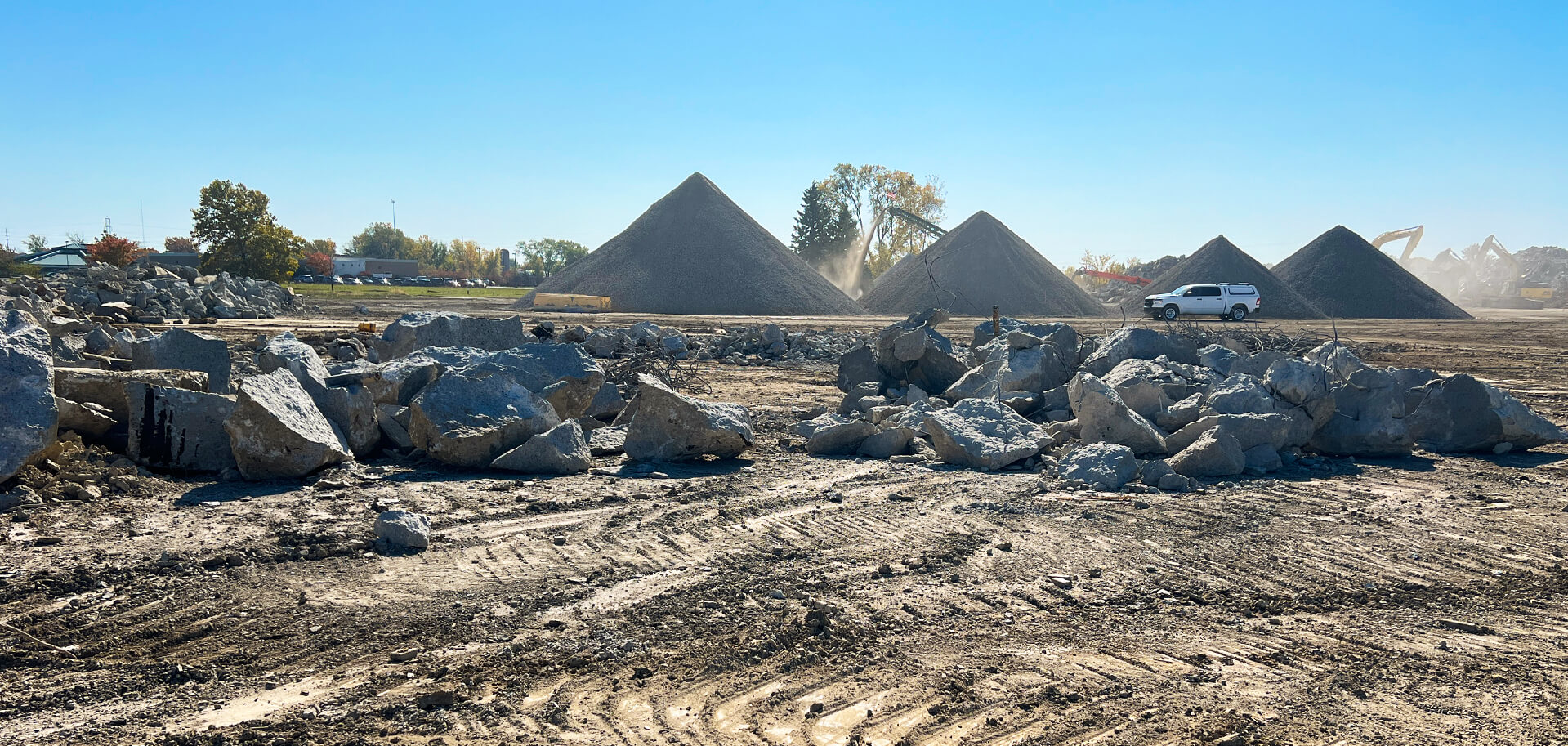
of concrete kept out of landfills and beneficially reused
$1 million+
saved for client by reusing concrete on-site
Summary
- Avgeris sought to redevelop a former manufacturing site into a data center but faced complex regulatory demands due to legacy polychlorinated biphenyls (PCBs) impacts.
- The project team collected thousands of samples over 5,800 staff hours without a health and safety incident.
- To enable cost-effective and sustainable redevelopment, the developer aimed to reuse on-site concrete as fill, requiring innovative testing to demonstrate compliance.
- Haley & Aldrich leveraged historical sampling data to guide the project, saving Avgeris substantial time and roughly $500,000 in preliminary work.
- Our team pioneered the use of incremental sampling methodology (ISM) on concrete to efficiently and thoroughly assess the 1-million-square-foot slab for PCBs.
- This approach allowed 75% of the concrete to be safely reused on-site, saving millions of dollars and eliminating more than 1,000 truckloads of landfill waste.
Client challenge
Real estate developer Avgeris and Associates had to prepare a former manufacturing site for a new life as the home of a data center, but many challenges stood in the way — chiefly the need to address regulatory requirements associated with decades-old PCB contamination that was discovered in several areas of the site during redevelopment.
To make the redevelopment more cost-effective and environmentally sustainable, Avgeris intended to use concrete from the existing building slab as fill rather than disposing of it off-site and trucking in new materials. But per the U.S. Environmental Protection Agency’s (EPA) Toxic Substances Control Act (TSCA), Avgeris had to test the fill for PCBs — in addition to already meeting brownfield cleanup requirements and the Ohio EPA’s Voluntary Action Program standards.
In other words, Avgeris had to satisfy three sets of requirements to successfully close the site, and the plan to use the concrete slab made an already complex project even more challenging.
Avgeris turned to Haley & Aldrich to help meet its goals. Not only did we have strong technical expertise and agency relationships, but we also brought deep knowledge of brownfield remediation and an ability to find cost-effective strategies for site redevelopment.
Our approach
Haley & Aldrich built a collaborative, multidisciplinary team that leveraged expertise in Ohio and nationally. This team guided Avgeris with innovative sampling and remediation approaches. It also advocated for the developer during negotiations with the many stakeholders involved.
The plan to use the concrete slab as fill offered an opportunity to do both. We faced the challenge of how to test 1 million square feet of building slab for PCBs in an efficient and technically sound way. Also, the U.S. EPA and the Ohio EPA had different requirements for clearing the concrete for use as fill; testing for PCBs to meet one agency’s standard wouldn’t necessarily satisfy the other agency.
Our experts decided to use ISM, a fairly new approach that involves processing and carefully combining many small samples from across representative areas of the slab, greatly reducing laboratory analytical costs relative to traditional sampling approaches that analyze individual samples. This method evaluated a large area of building slab much more efficiently than traditional approaches, allowing our client to determine quickly which areas of the slab could be reused and which would not meet TSCA and Ohio EPA standards. It also reduced risk and cost for Avgeris by providing regulatory certainty up front about whether materials were acceptable for reuse.
To our knowledge, this was the first time anyone had used ISM to evaluate concrete; prior investigations had used ISM to evaluate soil, but concrete posed unique challenges due to its physical differences from soil. Drawing on deep environmental sampling, analytical, and regulatory experience, we adapted ISM sampling protocols to evaluate concrete in a way that met TSCA regulations, providing regulators with a technically sound plan that they approved as satisfying agency requirements.
After careful evaluation, we determined that roughly 75% of the slab met regulatory standards and could be reused as fill for the redevelopment of the site — no off-site hauling or disposal was necessary. That saved Avgeris millions of dollars and prevented the need to transport more than 1,000 truckloads to a landfill. The U.S. EPA even asked to use our work as a case study for other projects in their portfolio, given our innovative use of ISM to evaluate concrete for compliance with TSCA regulations.
Value delivered
- Saved our client time and money throughout the project, notably by securing regulatory clearance to reuse most of a concrete slab as on-site fill
- Collected thousands of samples over 5,800 staff hours under complex site conditions involving simultaneous demolition and construction, without a health and safety incident
- Made the project more environmentally sustainable by reusing material and eliminating emissions that would have been produced by trucking the material to a landfill
- Guided our client through regulatory challenges in a way that met requirements and minimized future risk
- Helped transform a decades-old brownfield site into a property that will bring economic benefit to its community
“We faced massive impacts and significant issues along the way, yet Haley & Aldrich consistently stepped up to offer creative options and expert guidance. Their team’s proactive approach and steadfast presence at every critical juncture have been crucial to the progress and success of this work.”
—Stu Mills, Avgeris
For more information, contact:

Senior Project Manager

Senior Project Manager

Senior Project Manager, Hydrogeologist

Related Projects
Yard equipment company cleans up toxic aftermath from fire in record time,…

We help client win first-ever EPA approval in New England for residential…
Corrective Action Plan created in record time saves millions after one of…

Superfund site redeveloped into habitat for monarch butterflies
Our expertise helps reclaim a former shipyard to construct LEED Gold Certified…
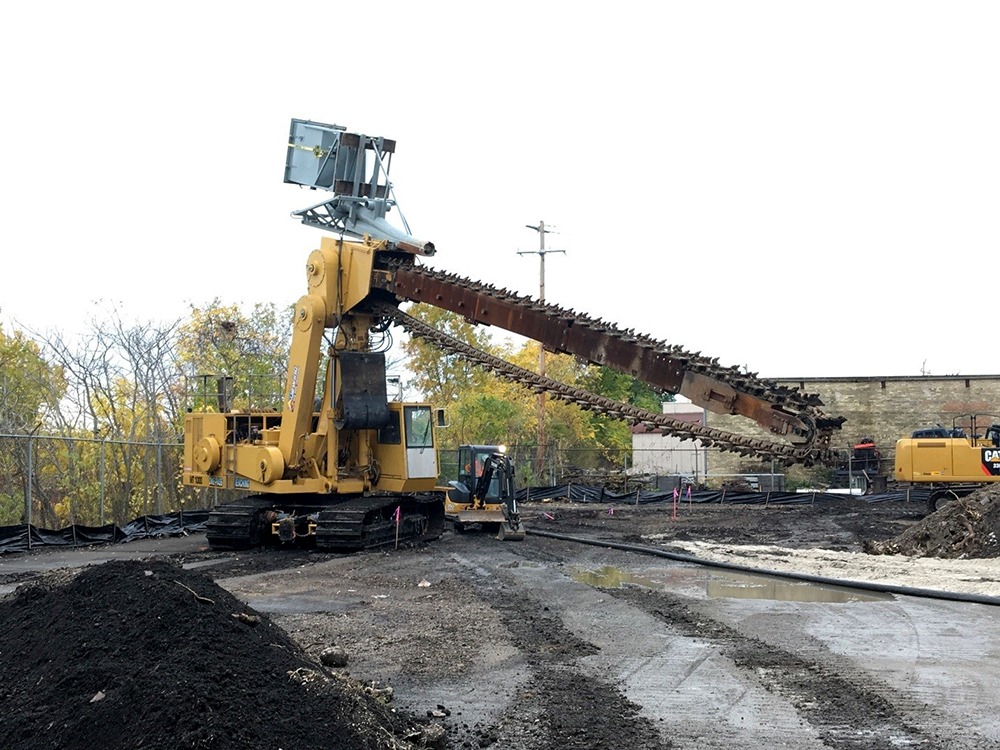
Design/build team remediates brownfield site under budget and on time
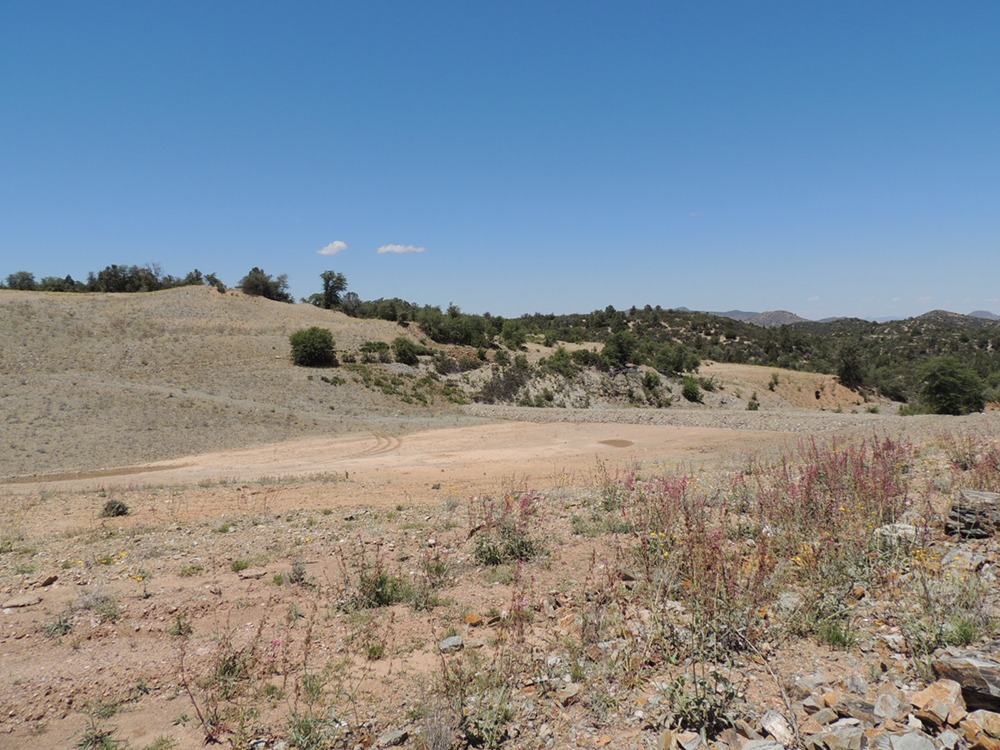
Uncommon approach saves Franciscan Friars millions on reclamation and restoration project
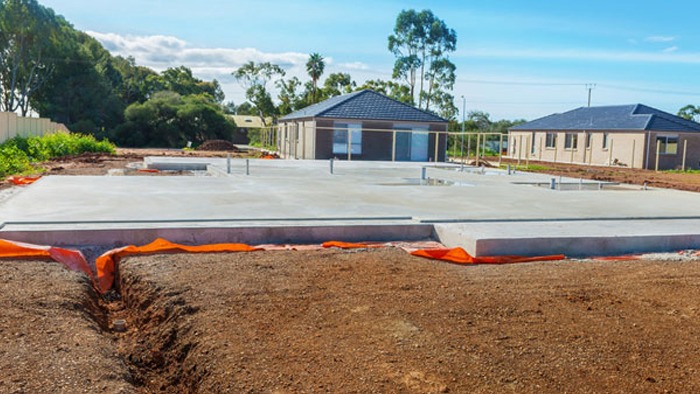
Haley & Aldrich streamlines vapor intrusion investigation and obtains regulatory and stakeholder…
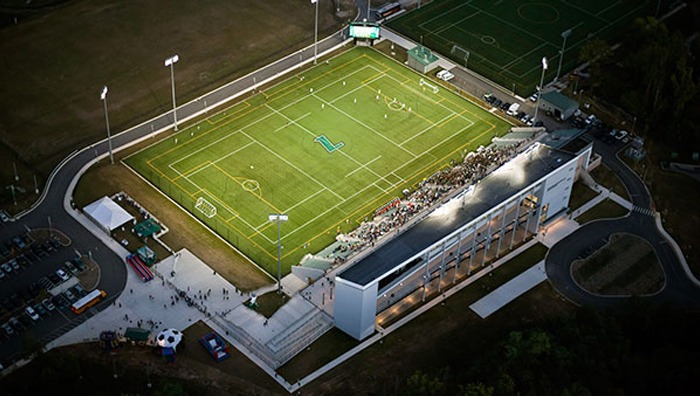
Haley & Aldrich helps a college overcome community opposition to transform landfill…
Oilfield services company limits liability through remediation plan that set EPA standards
Innovative planning turns stubborn landfill into profitable regional asset